Rapunzel: the coffee finder from the wish list, built in 30 minutes
Rapunzel's e-commerce team is small. Its list of ideas is not. One idea had waited a long time for its turn: a coffee finder for Heldenkaffee, the coffee from Rapunzel's own roastery. Marcus Fabian, Head of E-Commerce, built it himself in 30 minutes with the Frontic Experience Designer for Shopware, landing page included: three questions, then a recommendation from the range.
Rapunzel has been making organic food since 1974. Its shop carries a wide range,
from spreads and baking ingredients to Heldenkaffee from its own roastery, and
every product has a story about where it comes from and how it is made.
A small e-commerce team runs that shop. It never runs short of ideas. The hard
part is deciding which one gets its turn.
A coffee finder had been on Rapunzel's list for a long time: a few questions
that lead each customer to the Heldenkaffee that suits their taste. Something
more urgent always came first. And a configurator sounded like new tools,
programming and a project of its own.
There was a second obstacle. The information a coffee finder needs did not exist
as data. Taste, aroma, and whether a coffee comes as whole beans or ground were
written into product titles and descriptions, with no fields of their own in
Shopware. Those fields would have had to be created and filled in the Shopware
backend before anyone could test anything in the storefront.
Beforebackend first, then storefront
Idea Backendcreate the fields Developmentprogram the finder Storefronttest at last Waiting WaitingFeedback
Nowin 30 minutes
Idea Experience DesignerCoffee finder
Built directly in the storefront, with no detour through backend and development.
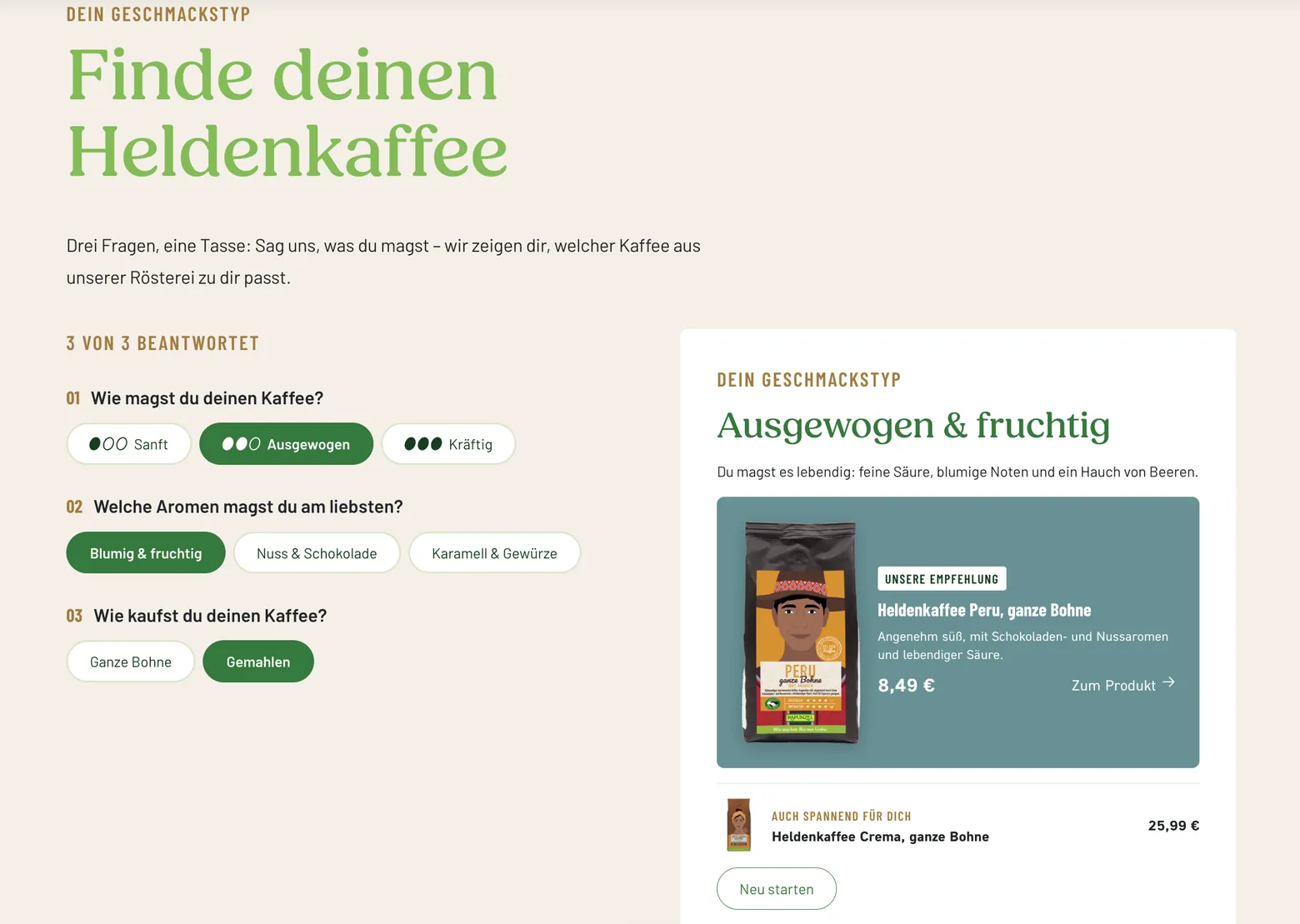
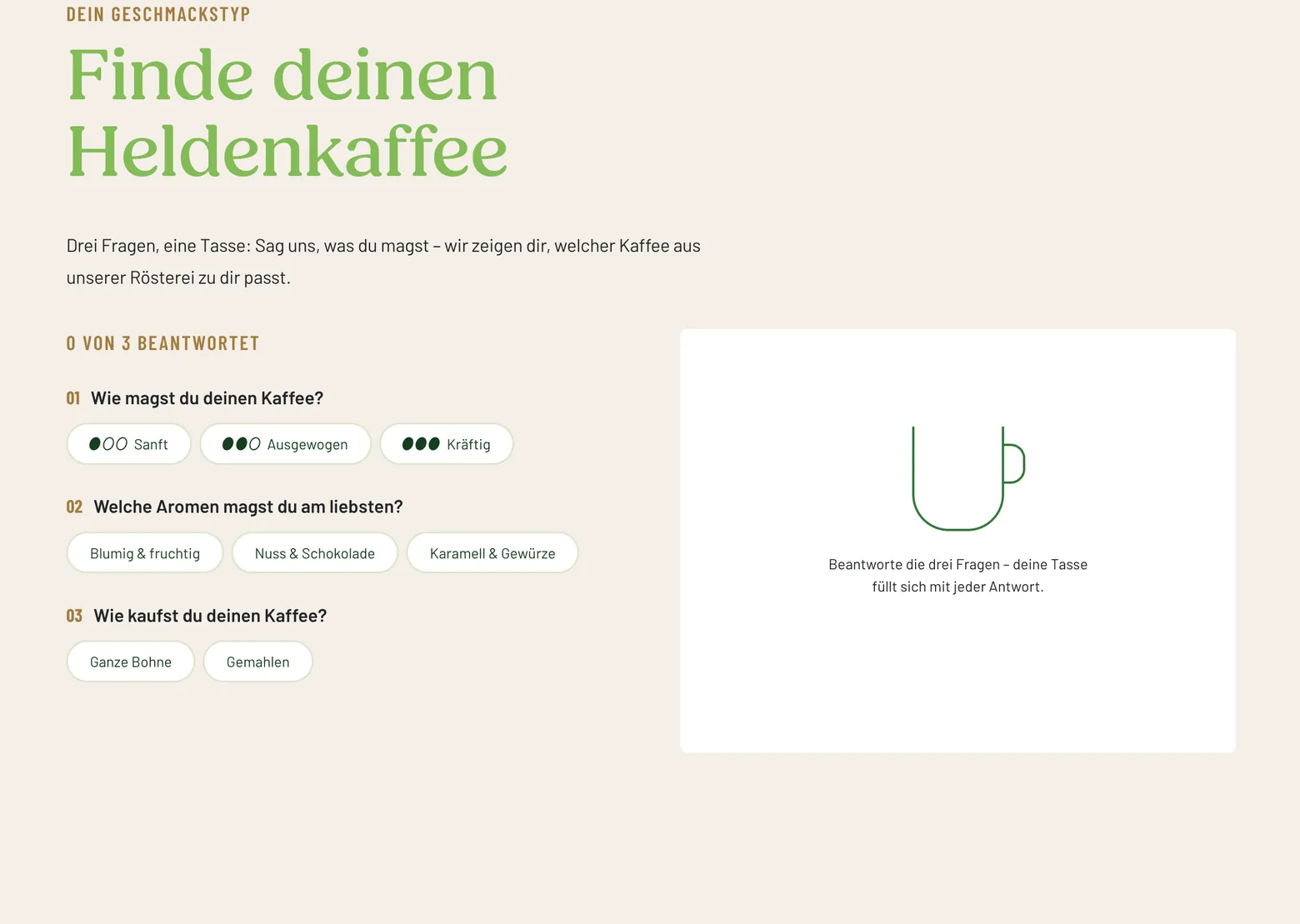
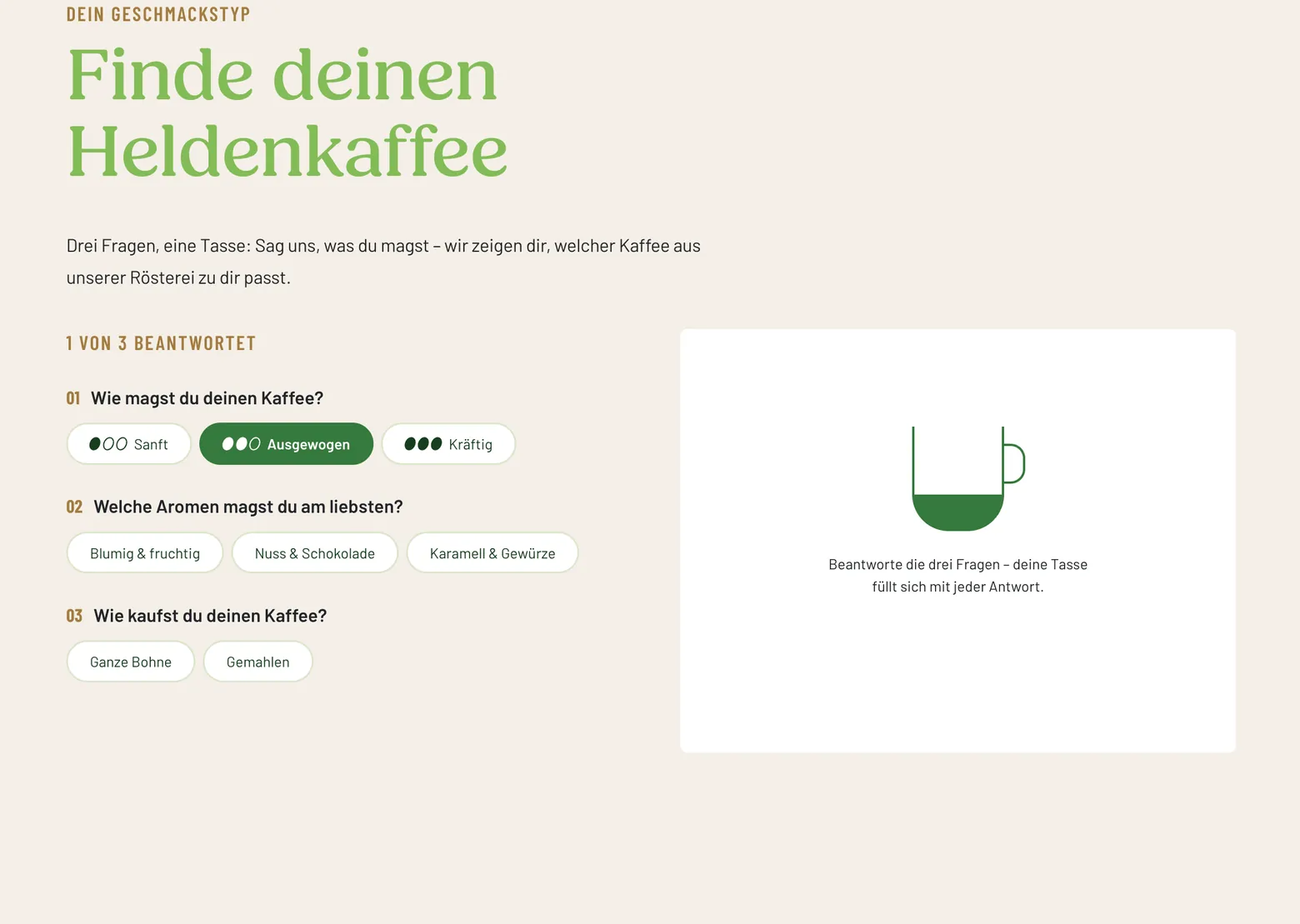
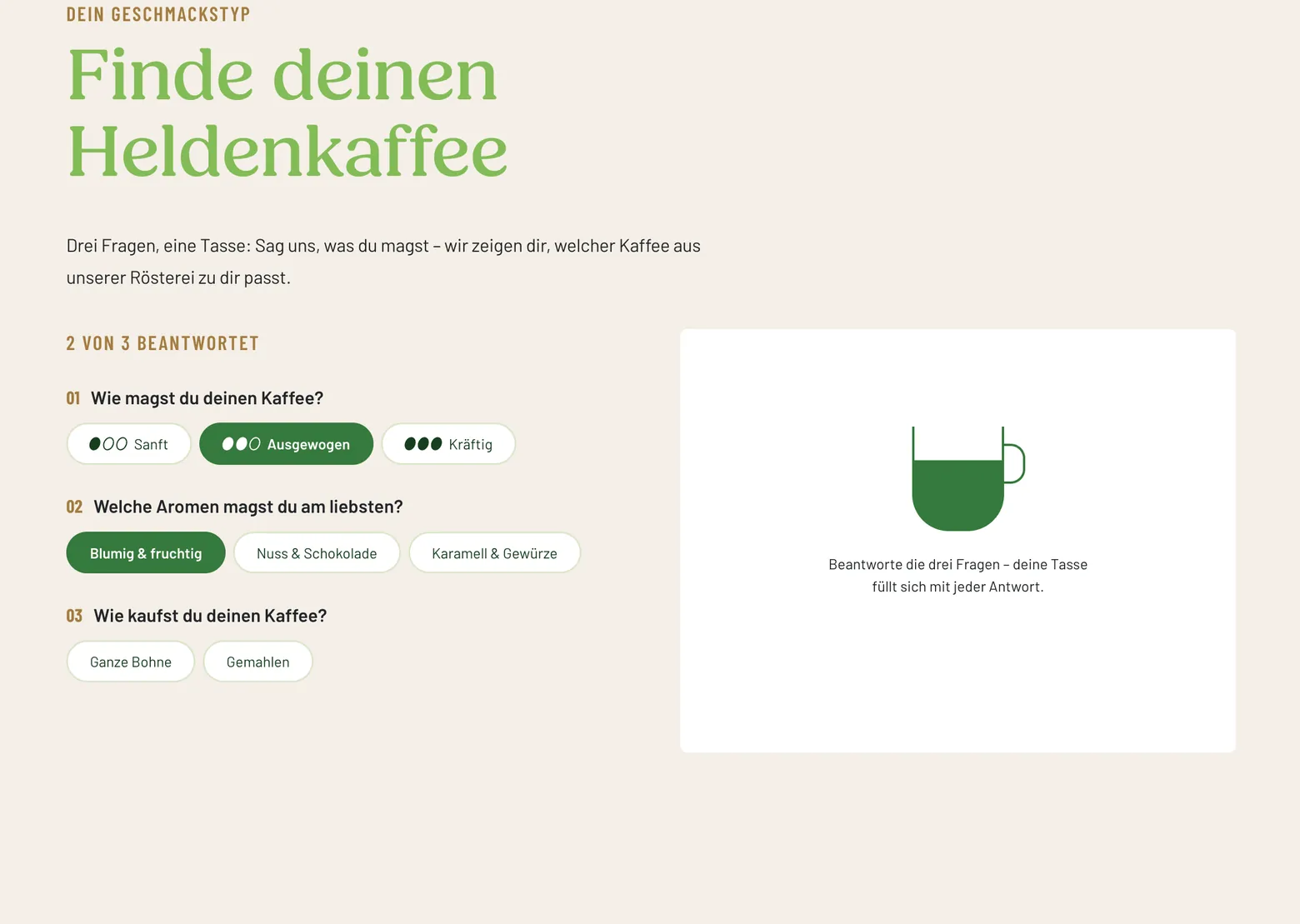
In those 30 minutes Marcus Fabian built two things himself: the Heldenkaffee
landing page and the coffee finder, “Finde deinen Heldenkaffee” (find your
Heldenkaffee). It asks three questions: how you like your coffee (gentle,
balanced or strong), which aromas you prefer (floral and fruity, nut and
chocolate, or caramel and spice), and whether you buy whole beans or ground. It
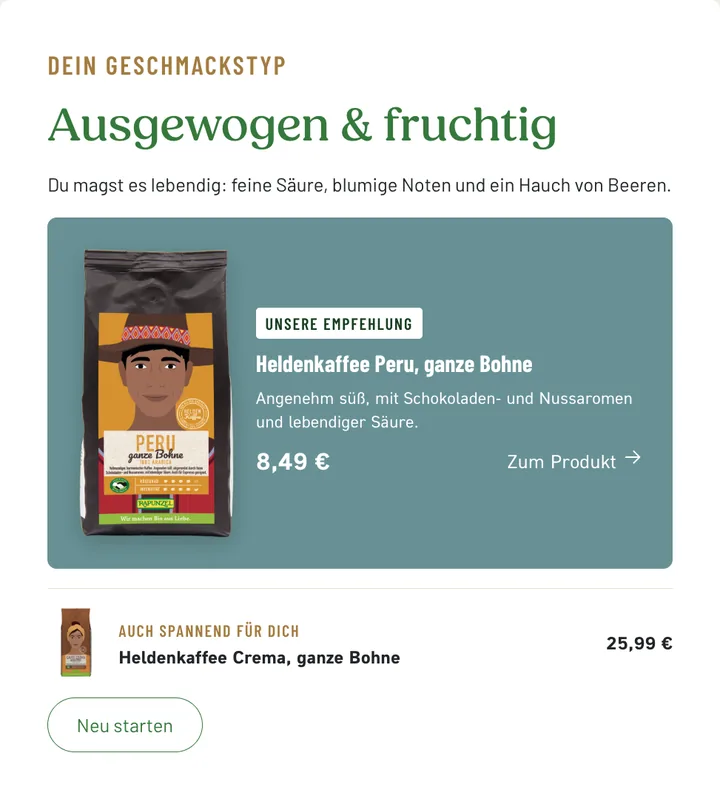
ends with the matching recommendation from the range.
Three questions, one recommendation: the coffee finder on the Heldenkaffee landing page.
No data project had to come before the first try: the finder needed no new
product data. Taste, aroma and form were never maintained as attributes in the
shop. With Frontic's Data Layer, the finder was built straight from the raw
product data as it is: titles and descriptions. Its search turns each answer a
customer gives into the matching coffees from the catalog.
Heldenkaffee Honduras, ganze Bohne
Mild, mit Karamell, Nuss und einer leicht beerigen Note.
→
TasteGentle
AromasNut & chocolate
FormWhole bean
The German title and description are enough to tell which answers a coffee matches.
The landing page and the coffee finder are built and ready to launch. Rapunzel
decides when.
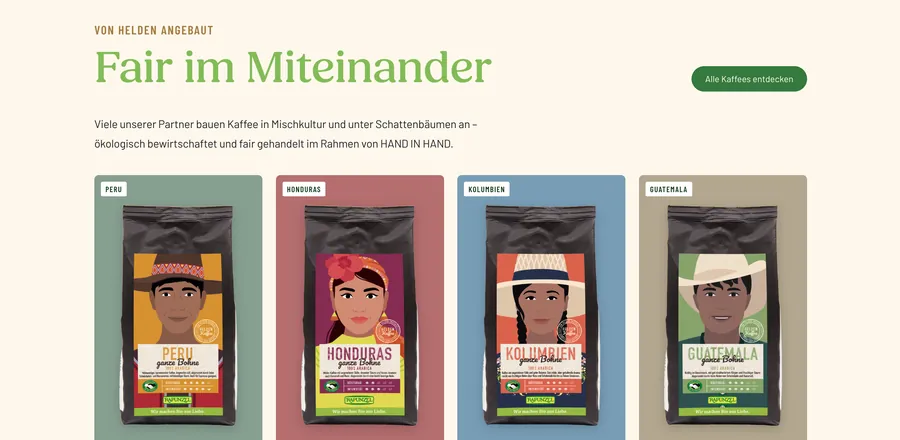
And the page looks like Rapunzel: colours, typography and components come from
its own design system, and the copy is in the brand's voice.
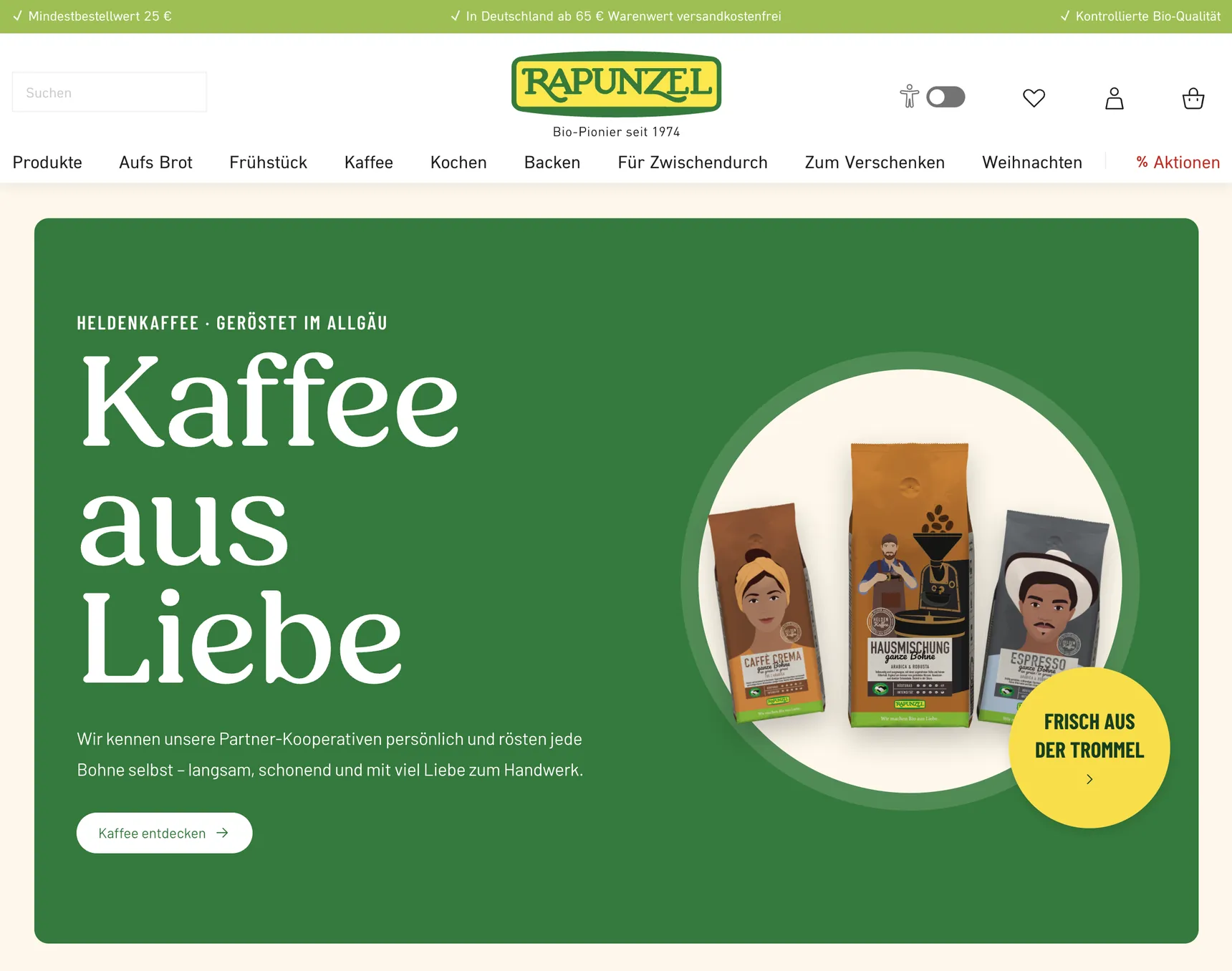
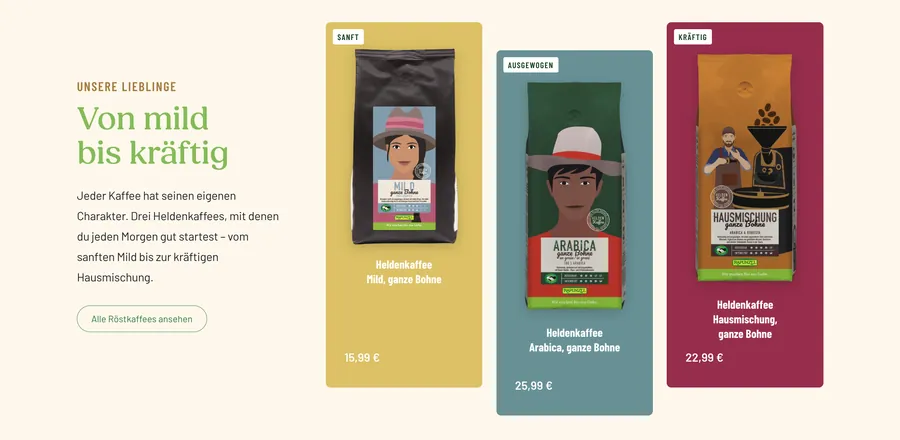
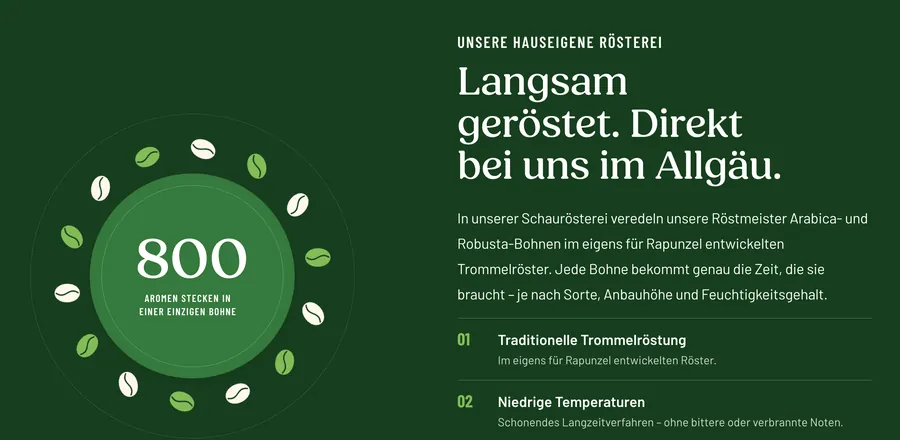
More sections of the landing page: the range, the roastery and the origins.
„Ein Konfigurator war für uns immer weit weg: neue Tools, Programmierung und
so weiter. Wenn wir so etwas jetzt aus der Hüfte heraus in dieser Qualität
umsetzen können, ist das viel wert.“
Small teams rarely run out of ideas. They run out of time. An idea normally has
to become a ticket, a project and a release before anyone sees it. With the
Experience Designer, the team builds it right inside Shopware Shopping
Experiences and publishes it when it looks right. And the result fits the shop,
because the data, the brand and the design system set the guardrails.